
Your Root Canal Was Done… So Why Is the Pain Back?
A root canal treatment is one of the most successful procedures for saving a damaged or infected tooth. In most cases, it provides long-lasting relief from pain and infection. However, like any dental treatment, there are situations where a tooth may not heal as expected or a new infection can develop months or even years later. When this happens, Re-Root Canal Treatment may be the best option to save your natural tooth.
If you are experiencing pain, swelling, sensitivity while biting, or a recurring pimple on the gums near a tooth that has already undergone a root canal, do not ignore these warning signs. Early diagnosis can often prevent the infection from spreading and improve the chances of saving the tooth.
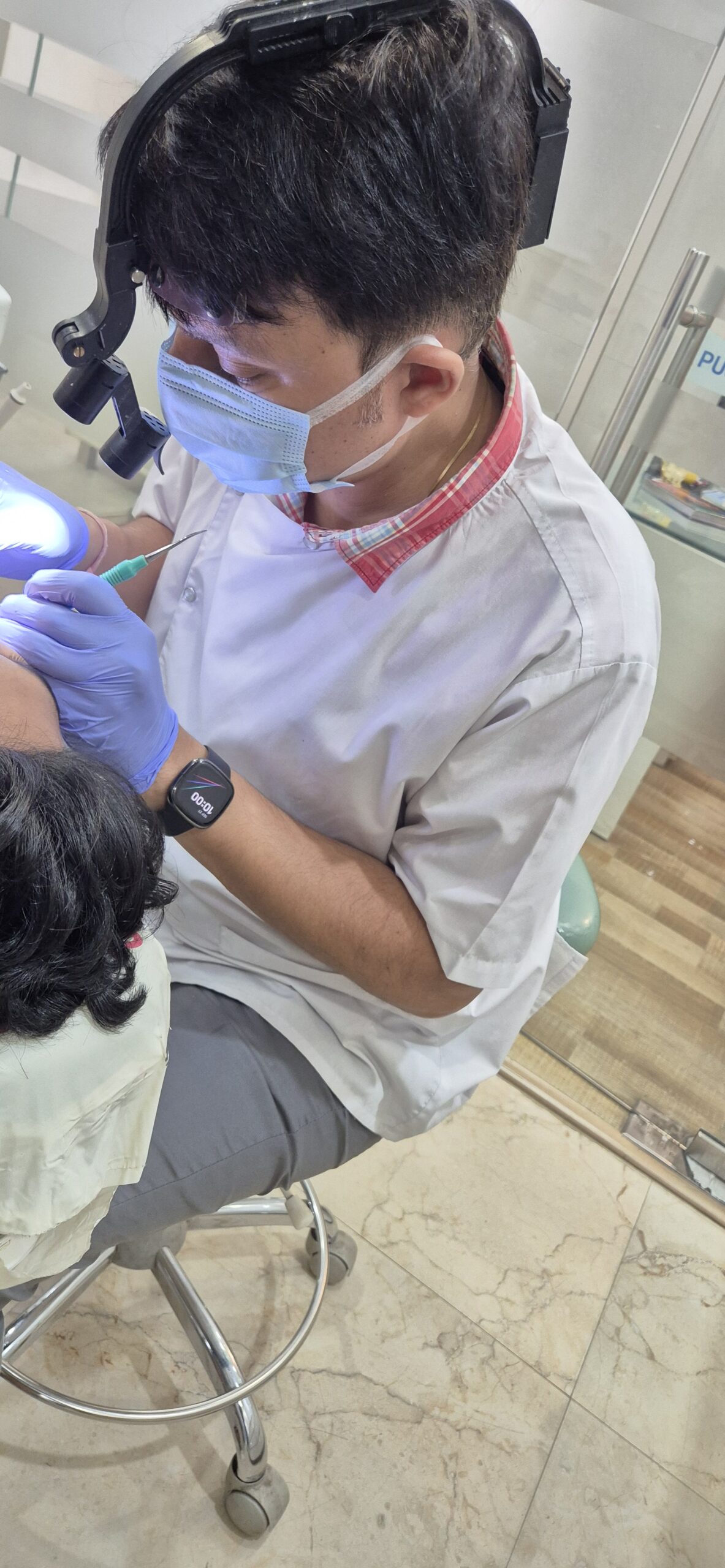
The good news is that Re-Root Canal Treatment is designed to remove the remaining or new infection, disinfect the root canal system again, and give your tooth a second chance. With modern magnification, digital imaging, and advanced endodontic techniques, many teeth that were once considered hopeless can now be successfully treated and preserved.
What Is Re-Root Canal Treatment?
Re-Root Canal Treatment, also known as root canal retreatment, is a procedure performed on a tooth that has previously received root canal treatment but has developed persistent symptoms or a new infection.
During the procedure, the existing root canal filling is carefully removed. The dentist then re-examines the complex root canal system, cleans and disinfects the canals thoroughly, identifies any missed anatomy if present, and seals the canals again to prevent reinfection.
The goal of Re-Root Canal Treatment is simple: eliminate infection, relieve pain, and preserve your natural tooth whenever possible.
Why Does a Root Canal Sometimes Fail?
Although root canal treatment has a high success rate, several factors can lead to failure over time.
Some common causes include:
- Hidden or missed root canals that were not treated during the initial procedure.
- New tooth decay allowing bacteria to enter the tooth.
- A cracked or fractured tooth.
- A damaged, loose, or leaking dental crown.
- Delayed placement of the permanent crown after root canal treatment.
- Complex root canal anatomy that is difficult to clean completely.
- New bacterial infection developing months or years after treatment.
A failed root canal does not automatically mean the tooth must be removed. In many cases, Re-Root Canal Treatmentoffers an excellent opportunity to save the natural tooth.
How Do You Know If You Need Re-Root Canal Treatment?
The signs may appear gradually or suddenly. Contact your dentist if you notice:
- Pain while chewing or biting.
- Swelling of the gums near the treated tooth.
- A small pimple or recurring boil on the gums.
- Persistent sensitivity or discomfort.
- Bad taste or discharge around the tooth.
- A loose crown or filling.
- Darkening of the treated tooth.
- Infection visible on a dental X-ray even without pain.
Some patients experience no symptoms at all. This is why regular dental examinations and X-rays remain important after root canal treatment.
How Is Re-Root Canal Treatment Performed?
Modern Re-Root Canal Treatment is a highly precise procedure performed using advanced techniques and technology. The primary goal is to eliminate the source of infection while preserving your natural tooth.
The procedure usually involves the following steps:
Step 1 – Detailed Examination
Your dentist performs a thorough clinical examination and takes digital X-rays or a CBCT scan, when required, to identify the cause of the failed root canal treatment.
Step 2 – Removing the Previous Root Canal Filling
The old root canal filling material is carefully removed to gain access to the complete root canal system.
Step 3 – Finding the Cause of Failure
Using magnification and modern instruments, the dentist carefully looks for:
- Missed canals
- Persistent infection
- Hidden cracks
- Blocked canals
- Broken instruments
- Leakage under old fillings or crowns
Identifying the exact cause is essential for long-term success.
Step 4 – Cleaning and Disinfecting the Canals
The root canals are thoroughly cleaned, reshaped, and disinfected using advanced irrigation techniques to remove bacteria and infected tissue.
Step 5 – Sealing the Root Canal Again
After ensuring the canals are clean and infection-free, they are sealed with a biocompatible material to prevent future bacterial contamination.
Step 6 – Protecting the Tooth
In most cases, a well-fitting dental crown is recommended to strengthen the tooth and protect it from fracture.
Is Re-Root Canal Treatment Painful?
One of the most common concerns patients have is whether retreatment will be painful.
With modern local anesthesia, advanced rotary instruments, and improved techniques, Re-Root Canal Treatment is generally as comfortable as a routine root canal procedure. Most patients experience relief because the source of infection is being removed.
Some mild tenderness for a few days is normal and usually settles with prescribed medication.
Re-Root Canal Treatment or Tooth Extraction?
When a previously treated tooth becomes infected again, many people assume extraction is the only solution. However, saving your natural tooth is usually the preferred option whenever it is clinically possible.
Benefits of Re-Root Canal Treatment
- Preserves your natural tooth
- Maintains normal chewing function
- Prevents neighboring teeth from shifting
- Preserves the natural bite
- Often avoids more complex replacement procedures
- Can provide many years of function with proper care
Extraction may be recommended only when the tooth cannot be restored because of severe fracture, extensive bone loss, or other conditions that make saving the tooth impossible.
How Can You Prevent Root Canal Failure?
Although not every failure can be prevented, good oral care significantly improves long-term success.
- Complete the permanent crown as advised by your dentist.
- Maintain excellent oral hygiene.
- Avoid biting hard objects with treated teeth.
- Attend regular dental check-ups.
- Seek treatment immediately if pain or swelling develops.
- Treat new cavities before they reach the root canal.
Regular follow-up visits help detect small problems before they become major infections.
Frequently Asked Questions About Re-Root Canal Treatment
Can a root canal fail after many years?
Yes. A tooth that has had a root canal can develop a new infection months or even years later because of new decay, a leaking crown or filling, an untreated canal, or a crack in the tooth. Regular dental check-ups help detect these problems early.
Is Re-Root Canal Treatment successful?
Yes. Re-Root Canal Treatment has a high success rate when the tooth is carefully evaluated, properly cleaned, disinfected, and restored. The outcome depends on the condition of the tooth, the cause of failure, and timely treatment.
Will I need a crown after Re-Root Canal Treatment?
Depending on the tooth and the amount of remaining tooth structure, a well-fitting dental crown or other appropriate restoration may be recommended to protect the tooth from fracture.
Is extraction better than Re-Root Canal Treatment?
Not always. Whenever possible, saving your natural tooth is usually the best option. Re-Root Canal Treatment allows many teeth to function successfully for years, avoiding the need for extraction and replacement.
How long does Re-Root Canal Treatment take?
The number of appointments depends on the complexity of the tooth, the severity of the infection, and whether additional procedures are required. Your dentist will recommend the most appropriate treatment plan after examination.
Why Saving Your Natural Tooth Matters
Your natural tooth is designed to function in perfect harmony with your bite. Preserving it whenever possible helps maintain chewing efficiency, supports surrounding teeth, and protects the jawbone.
Modern Re-Root Canal Treatment offers many patients a second opportunity to save their natural tooth instead of choosing extraction. With proper treatment and a well-sealed dental crown, many retreated teeth continue to function successfully for years.
Conclusion
Experiencing pain after a previous root canal can be worrying, but it does not always mean that the tooth needs to be removed. In many cases, Re-Root Canal Treatment can eliminate persistent infection, relieve discomfort, and give the natural tooth another opportunity to remain healthy and functional.
Persistent pain, swelling, tenderness while biting, or a recurring gum boil around a previously treated tooth should not be ignored. Early examination can help identify the underlying cause and improve the chances of successfully saving the tooth before the problem becomes more complicated.
With modern endodontic techniques, advanced imaging, careful disinfection, and precise treatment planning, Re-Root Canal Treatment can provide a reliable solution for many failed root canal cases. Whenever possible, preserving the natural tooth remains the preferred approach for maintaining comfortable chewing, a healthy bite, and long-term oral function.
Expert Advice
Dr. Nikhil Sharma
Microscopic Endodontist | Root Canal Specialist | Implantologist
“Every tooth deserves a second chance before considering extraction. My approach to Re-Root Canal Treatment is to identify the exact reason for failure, eliminate the infection completely, and restore the tooth with precision. Modern endodontics allows us to save many teeth that were once considered hopeless. Early intervention is the key to achieving the best long-term outcome.”
Pain after a root canal can be worrying, but it doesn't always mean the tooth is lost. Discover how Re-Root Canal Treatment can eliminate infection, relieve pain, and help save your natural tooth.
Modern re-root canal treatment uses advanced magnification, digital imaging, and precise cleaning techniques to treat persistent infections while preserving your natural smile whenever possible.
✓ Know why a root canal-treated tooth may hurt again.
✓ Learn the warning signs that require immediate attention.
✓ Discover how re-root canal treatment can save your natural tooth.
✓ Understand when retreatment is a better option than extraction.